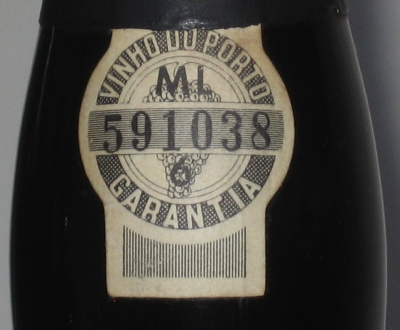
Page 1 of 1
Selo de Garantia
Posted: 10:06 Sun 20 Jul 2008
by DRT
At
this off-line in London on 11 Jul 08 jdaw1 asked a question about "old style" Selo de Garantia labels.
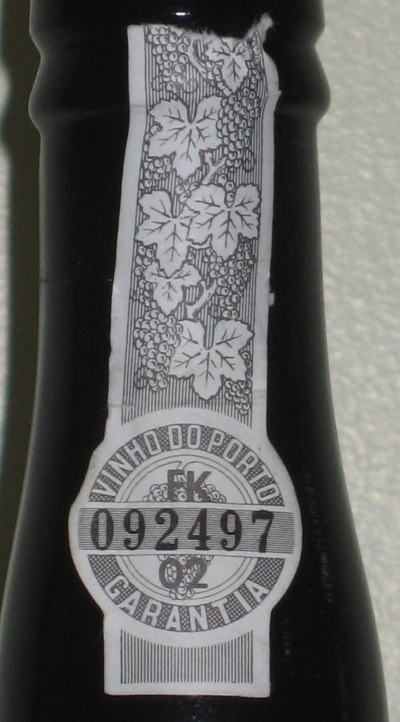
Here is a nice clean example of the old style label from a
Royal Oporto 1970.

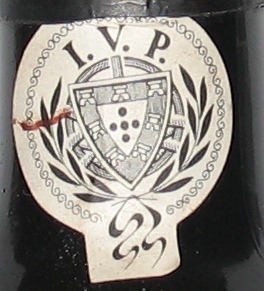
Does anyone know exactly when the new style came into use?
Derek
Posted: 16:47 Sun 20 Jul 2008
by Glenn E.
Well we can narrow it down a bit... my bottle of Royal Oporto 1977 has the new style Selo de Garantia.

Posted: 17:54 Sun 20 Jul 2008
by ac-fast
Sorry cant help you about that.
But I`ve noticed thatmy Noval 66 - bottled in denmark have NO garantia Label - only a label from the Danish tax office
IVDP labels
Posted: 18:02 Sun 20 Jul 2008
by jdaw1
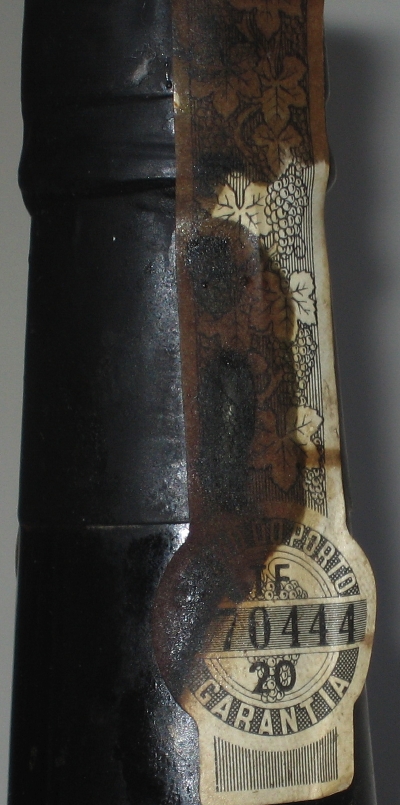
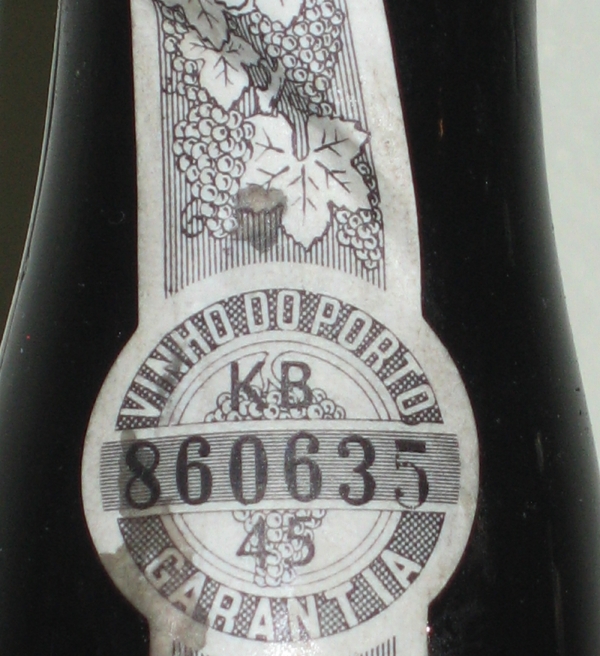
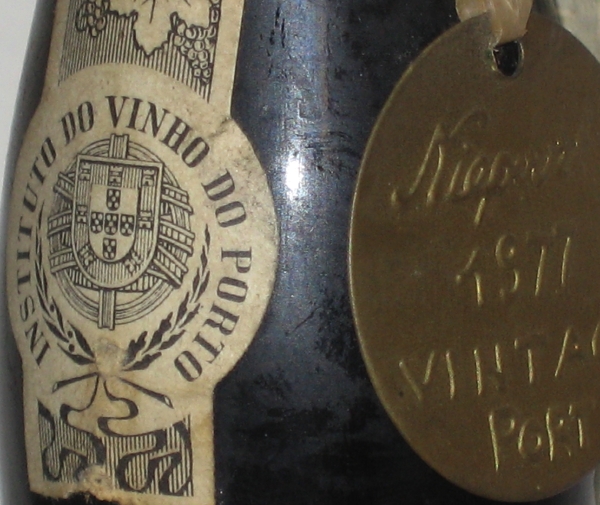
Some more pictures of IVDP labels, or at least the fronts thereof:
Posted: 22:27 Sun 20 Jul 2008
by JacobH
There’s also a difference between pre- and post-2003 bottles when the IVP became the IVDP and the necessary extra words were squeezed onto the back.
Also, it’s interesting that although the designs of some of Julian’s labels haven’t changed, the method of printing has: this would presumably give further numbers of variations.
I wonder if some sort of chronology could be put together of the changing styles. It might help date unknown bottles (or even catch fakes).
Selo de Garantia
Posted: 23:10 Sun 20 Jul 2008
by jdaw1
When are the
Selo de Garantia label assigned? Two years after the vintage, or on release from the cellars. If the latter, as I suspect, then, like ac-fast’s question about
different labels, different bottles from the same vintage could have different styles of
Selo de Garantia.
Posted: 03:42 Mon 21 Jul 2008
by Andy Velebil
Keep in mind that the Selo only guarantees that the contents of the bottle are from the demarcated Douro region, that is all.
Older bottlings that were bottled by outside sources (BB&R, Army Navy, Etc) were not allowed to put the Selo on, as they were bottled outside of Portugal. So you will get many older bottles without it.
The Selo's are only assigned and put on at time of bottling. The exception to this is when stocks will knowingly be held back for later release years down the road and no labels and Selo's are applied at time of bottling. when those ex-cellars stocks are re-released and new labels are put on, so are now Selo's. That is why you can get 30+ year old VP's that are re-released with new labels and Selo's.
IIRC, 1970 VP's were the last to use the old style Selo. I will have to double check that though.
Posted: 23:23 Mon 21 Jul 2008
by JacobH
Andy V wrote:The Selo's are only assigned and put on at time of bottling. The exception to this is when stocks will knowingly be held back for later release years down the road and no labels and Selo's are applied at time of bottling. when those ex-cellars stocks are re-released and new labels are put on, so are now Selo's. That is why you can get 30+ year old VP's that are re-released with new labels and Selo's.
In the case of a re-release, do you know whether they simply reprint the selo or is a new number issued?
I’ve also wondered about how they deal with Ports that have no indication of vintage and are issued perennially (e.g. Tawnies and Rubies). Presumably they are retested annually, but I haven’t seen any information as to whether this results in a new number being issued (which might be quite interesting for the purposes of dating bottles) or not.
-Jacob
Posted: 02:51 Tue 22 Jul 2008
by Andy Velebil
The numbers on the Selo only give basic info, like producer, vintage, and type. The Selo numbers are in no logical order. The IVDP gives a large stack, in numerical order to a producer, who then takes some off for todays bottling run of X Port. Then tomorrow he takes off some more for a bottling run of Y port. He then has to report back to the IVDP what series of numbers were used for what bottles.
If a label is damaged during the bottling line, then that specific Selo # has to be reported to the IVDP as not being used/damaged or destroyed.
There is no way to figure out what the numbers mean, they are totally random.
Posted: 16:35 Tue 22 Jul 2008
by Glenn E.
JacobH wrote:I’ve also wondered about how they deal with Ports that have no indication of vintage and are issued perennially (e.g. Tawnies and Rubies). Presumably they are retested annually, but I haven’t seen any information as to whether this results in a new number being issued (which might be quite interesting for the purposes of dating bottles) or not.
I was curious about that same thing, but it was easy to check. Just go look at several bottles in the store and you'll see that they very rarely have the same number. In fact, I've never seen two bottles with the same number though it should be theoretically possible.
I *have* seen sequential numbers before... I recently had 3 in a row on Ramos Pinto Quinta do Bom Retiro 20-yr old Tawny.
I've been told that each number applies to an entire bottling run which would seem to make identical numbers in a case much more likely than sequential numbers... but perhaps they deliberately scramble them while boxing them up or something. /shrug
67,600,000,000 possible codes
Posted: 18:26 Tue 22 Jul 2008
by jdaw1
Two characters, six digits, two digits: there are 26Ã 26Ã 1,000,000Ã 100 = 67,600,000,000 possible codes. That’s enough for one per bottle.
Posted: 18:48 Tue 22 Jul 2008
by DRT
I don't get the one-code-per-bottle-run-theory. I have never seen two identical codes and I really don't think anyone would go the the trouble of mixing up the bottles. Many small producers would only have 1 bottle run of SQVP per year, which would mean every bottle would have the same number

Posted: 19:47 Tue 22 Jul 2008
by Glenn E.
Yeah I had my doubts about it as well, but like I said that's what someone told me. I can't remember who it was, though. /shrug
You know what's funny? I'd never noticed the 2 letters or the lower 2 digits. I thought the Selo was just a 6-digit number, which made the 1-number-per-run explanation seem reasonable.
Posted: 20:01 Tue 22 Jul 2008
by Andy Velebil
Each bottle receives a different selo number. A major pain for producers to track and report back to the IVDP.
Yes, you can get a sequential series of numbers if the bottles were from the same production line and packed in the same case at the end of the bottling line. But there is no such thing as one number for multiple vintages. That would make faking them easy and tracking them impossible.