Re: One quiz at a time
Posted: 12:06 Thu 15 Jan 2015
My theory was the start and end of the 1st French Republic but can't see the link of drinking port to commemorate the end. Probably not my go either.
A place for those passionate about port, and for those new to it. We hold lots of Port tastings: please join us!
https://www.theportforum.com/
I just checked and it isn't.JWEW wrote:My theory was the start and end of the 1st French Republic but can't see the link of drinking port to commemorate the end. Probably not my go either.

I had got this far, but found nothing while searching for relevant birth/marriage/death of Lous XVI or Marie Antoinette; on a wider search, 10th Feb was the day Pushkin died; I have no idea of a link between the two aside from "both death dates" and "both historical figures". Regarding the Champagne, Port and AHB connection my only thought was Alex's Quinquagenary which contained both, so the other alternative was an anniversary.djewesbury wrote:When I said you won't find what the date signifies by googling it, I meant that whatever it is will not be connected with this date. What was the theme of the first date? And what could be reasonably supposed, therefore, to link it with the second? Maybe working on part three will lead you to part two.
These are all interesting but quite beside the point.PhilW wrote:I had got this far, but found nothing while searching for relevant birth/marriage/death of Lous XVI or Marie Antoinette; on a wider search, 10th Feb was the day Pushkin died; I have no idea of a link between the two aside from "both death dates" and "both historical figures". Regarding the Champagne, Port and AHB connection my only thought was Alex's Quinquagenary which contained both, so the other alternative was an anniversary.djewesbury wrote:When I said you won't find what the date signifies by googling it, I meant that whatever it is will not be connected with this date. What was the theme of the first date? And what could be reasonably supposed, therefore, to link it with the second? Maybe working on part three will lead you to part two.
Nope.AW77 wrote:I think napoleonic troops occupied Portugal in the early 19th century. Is there a connection to this? Champagne for the start of the occupation and port for the end?
Oh well; I can see this is going to be painfuldjewesbury wrote:These are all interesting but quite beside the point.
What happened to Louis XVI on the first date?
Which '48/'49 might be relevant to the second date?
Why might it be impossible to search for this event in an 'On This Day' type of website?
Can you really not remember anything at all that you have learned about AHB, indeed you have learned it here in this very thread?
As I pointed out the clue about AHB would only help you solve the first date and that has been solved now.
A clue, that doesn't have any direct bearing on the main quiz, but which might point you in the right direction: on what date did the Battle of the Boyne take place?

NO!!!PhilW wrote:Oh well; I can see this is going to be painfuldjewesbury wrote:These are all interesting but quite beside the point.
What happened to Louis XVI on the first date?
Which '48/'49 might be relevant to the second date?
Why might it be impossible to search for this event in an 'On This Day' type of website?
Can you really not remember anything at all that you have learned about AHB, indeed you have learned it here in this very thread?
As I pointed out the clue about AHB would only help you solve the first date and that has been solved now.
A clue, that doesn't have any direct bearing on the main quiz, but which might point you in the right direction: on what date did the Battle of the Boyne take place?
I never expected (no-one expects...) - is it the Spanish Inquisition?
He died, due to his head not being connected to his body.djewesbury wrote:What happened to Louis XVI on the first date?
No idea, except for previous guesses (approx. 65 year if 19xx, so birthday/retirement already suggested).djewesbury wrote:Which '48/'49 might be relevant to the second date?
Because it relates to a family member rather than a celebrity or historical figure, or because the event was not especially significant (assuming the former).djewesbury wrote:Why might it be impossible to search for this event in an 'On This Day' type of website?
Yes, he owns a mine in New Mexico. No, I'm not re-reading the entire thread! Perhaps he is distantly related to one of the people who form part of the answer?djewesbury wrote:Can you really not remember anything at all that you have learned about AHB, indeed you have learned it here in this very thread?
... to Louis XVIdjewesbury wrote:As I pointed out the clue about AHB would only help you solve the first date and that has been solved now.
1st July 1690.djewesbury wrote:A clue, that doesn't have any direct bearing on the main quiz, but which might point you in the right direction: on what date did the Battle of the Boyne take place?
Well, I thought it was amusing anyway :pdjewesbury wrote:NO!!!PhilW wrote:Oh well; I can see this is going to be painfuldjewesbury wrote:These are all interesting but quite beside the point.
What happened to Louis XVI on the first date?
Which '48/'49 might be relevant to the second date?
Why might it be impossible to search for this event in an 'On This Day' type of website?
Can you really not remember anything at all that you have learned about AHB, indeed you have learned it here in this very thread?
As I pointed out the clue about AHB would only help you solve the first date and that has been solved now.
A clue, that doesn't have any direct bearing on the main quiz, but which might point you in the right direction: on what date did the Battle of the Boyne take place?
I never expected (no-one expects...) - is it the Spanish Inquisition?
12th of July? What kind of funny new-fangled calendar are you using! See previous answer (and yes, I got the "potential offset between Gregorian vs JDAW Julian calendars" hint).djewesbury wrote:Really - answer the simple question, designed to put you on the right track - what date did the Battle of the Boyne (aka the Twelfth of July) really take place on????

Yep, I got that bit; and discovered that Guy Fawkes was executed on 31st Jan, for example - though I hadn't checked if I'd corrected the date in the right direction... but hadn't got further in connecting port, or '48/'49, yet.djewesbury wrote:So, the 10th of February is a date in the Gregorian calendar. But wait.. we've already established that the date might not be readily lookupable (Derek, if you report me to Apostrophe Crimes, I will never allow you to eat pork pie again) - not because it's a private occasion.. but because.. the date has changed because of the adoption of the Gregorian calendar.
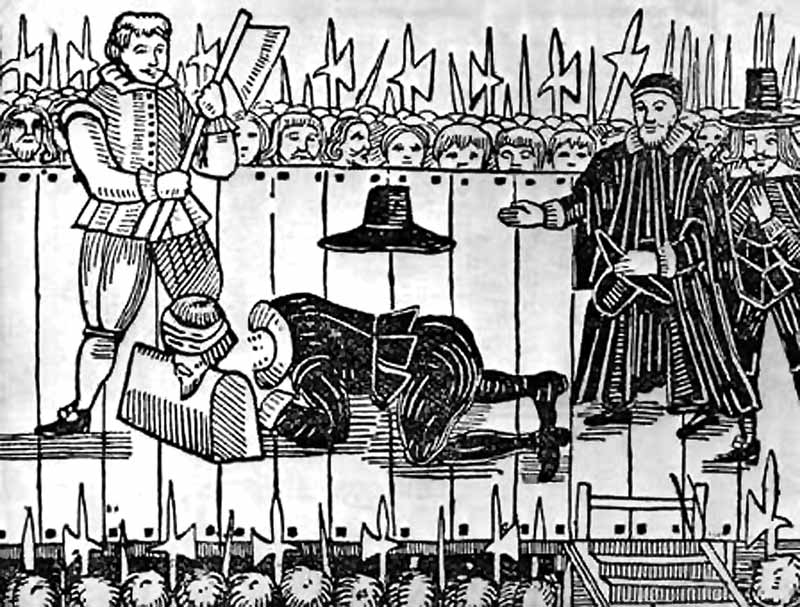
Can we set some fireworks off?djewesbury wrote:Champagne for a French king, Port for an English.
Simples.
I resign.
Because for that we have to wait for Feb 19th? Or can we do it 11 days earlier due to the UK calendar change, or 10days earlier for the French, or... nope, 12 days for the Chinese it seems... right, Feb 7th it is! Ah, no, bugger, it's related to lunar/solar cycles, ah well I have to wait.djewesbury wrote:Only if they're not Chinese.


Oh dear, I'll retire and attempt to think of a suitable question. If anyone else can think of one then please feel free to usurp me.djewesbury wrote:JWEW's turn, as he guessed the first bit correctly.
I think the above means that at the 1648/1649 year change there was only a difference of 10 rather than 11 days; this would mean that 30 Jan 1648 (Old Style) = 9 Feb 1649 (New Style), which would mean you can drink your port a day earlier - hurrah!djewesbury wrote:30 Jan 1648 (Old Style) = 10 Feb 1649 (New Style).
Good lord, you're right! Huzzah. And Rachel's January abstemiousness will be a distant and unpleasant memory by then.PhilW wrote:On interesting thing I have learned from this question is that not all countries switch from Julian to Gregorian at the same time. A consequence of this is that different countries "lost" different numbers of days when switching due to the drift between the calendar methods for determining leap years.
In 1582 the calendars were defined to have a 10 day difference; this continued until 1700 when it increased to 11 days. Much of Europe changed from Julian to Gergorian in the period 1580-1610 (10 days skipped), but the UK only changed in 1752 (11 days shift); I can only imagine the dates between countries must have been confusing for that 150years.
I think the above means that at the 1648/1649 year change there was only a difference of 10 rather than 11 days; this would mean that 30 Jan 1648 (Old Style) = 9 Feb 1649 (New Style), which would mean you can drink your port a day earlier - hurrah!djewesbury wrote:30 Jan 1648 (Old Style) = 10 Feb 1649 (New Style).
While it is true that there is a three day discrepancy between the Julian and Gregorian calendars in the period 46 BCE to 325CE, there is no clear reason why 46BCE should be considered the origin for both calendars (i.e. that they must be in alignment at that time). I get the impression that the alignment point of the Council of Nicea was selected since that was the date when the method for calculation of the date of Easter was changed, and presumably pulled the date for Easter back to what was considered the acceptable range, having drifted too later in the year by the 1500s. If selecting an arbitrary alignment date, 0BCE/CE would have seemed like a simple choice, but any date will serve providing it is clearly defined. I think you're on a loser on this one!jdaw1 wrote:The Julian calendar started in 46 B.C.E. Later Pope Gregory corrected the error in the Julian accumulated since the Council of Nicaea in 325 C.E., rather than since the original Julian proclamation. During those 3.7 centuries the Julian calendar had, rounded, another 3 days of error. So the calendar is still three days wrong.
True, I should have said 1BCE/CE; though the lack of a zero always rankles for me.djewesbury wrote:There was no "0 BCE/CE".
You and Pol Pot. The French were far more sensible. 1792 became Year I of the French Republic.PhilW wrote:True, I should have said 1BCE/CE; though the lack of a zero always rankles for me.djewesbury wrote:There was no "0 BCE/CE".
Duh. The JDAW.djewesbury wrote:What would we call this new calendar? The Superjulian? The New Julian?
You're poking me on purpose, aren't you? Both of you!PhilW wrote:True, I should have said 1BCE/CE; though the lack of a zero always rankles for me.djewesbury wrote:There was no "0 BCE/CE".
Glenn, I'm with you on this one! In fact the only numerical denier that I can recall here is Rob (RAYC)!Glenn E. wrote:You're poking me on purpose, aren't you? Both of you!PhilW wrote:True, I should have said 1BCE/CE; though the lack of a zero always rankles for me.djewesbury wrote:There was no "0 BCE/CE".
We cannot let Prince win. There was no reason to party like it was 1999, as the 2nd millennium wasn't going to end for another year.
Because that that is when the Julian calendar was correctly aligned, by design. Caesar did not choose the start and drift such that it would be correct when a few bishops partied in Turkey.PhilW wrote:there is no clear reason why 46BCE should be considered the origin for both calendars
So the calendar is wrong and Easter might be correct. Whoopee do.PhilW wrote:I get the impression that the alignment point of the Council of Nicea was selected since that was the date when the method for calculation of the date of Easter was changed
I seeded that error. You missed the seed and planted your own tree.PhilW wrote:If selecting an arbitrary alignment date, 0BCE/CE would
Oh. That’s such a disappointment.PhilW wrote:I think you're on a loser on this one!
Yes. My phone is three days wrong. As is yours.djewesbury wrote:Do you care?
But I insist. It's the least we can do to honour you. L'an 1 de JDAW. Ça marche, non?jdaw1 wrote:Sigh. With supporters like these, who needs opponents. Gregory did not change the year — that would have been confusing — he shifted the calendar by a few days. I am not proposing changing the year, which is hallowed by antiquity.
No.djewesbury wrote:Do we need a vote on this????
DRT wrote:No.djewesbury wrote:Do we need a vote on this????


Follow Pol Pot's lead and burn them.djewesbury wrote:DRT wrote:No.djewesbury wrote:Do we need a vote on this????
What shall I do with all these campaign posters, with Julian's avatar on them?
I hadn’t thought of that.djewesbury wrote:write that letter to the Astronomer Royal
Having thought about this further, I retract my correction. On the basis that both measurements (CE) are linear and do not have to be positive (if disagreeing please demonstrate where positive values only are mandated), therefore the sequence when counting backwards in CE would be 5CE, 4CE, 3CE, 2CE, 1CE, 0CE, -1CE -2CE etc. Similarly counting forwards (in time) for BCE would be 3BCE, 2BCE, 1BCE, 0BCE, -1BCE etc. On that basis "0 BCE/CE" has exactly the same meaning as "1 CE/BCE" and therefore refers to the same boundary under discussion. I'm keeping the zero!PhilW wrote:True, I should have said 1BCE/CE; though the lack of a zero always rankles for me.djewesbury wrote:There was no "0 BCE/CE".